CS224W-Machine Learning with Graph-Graph Transformers
Transformers
Transformers Ingest Tokens
- Transformers map 1D sequences of vectors to 1D sequences of vectors know as tokens
- Tokens describe a “piece” of data - e.g., a word
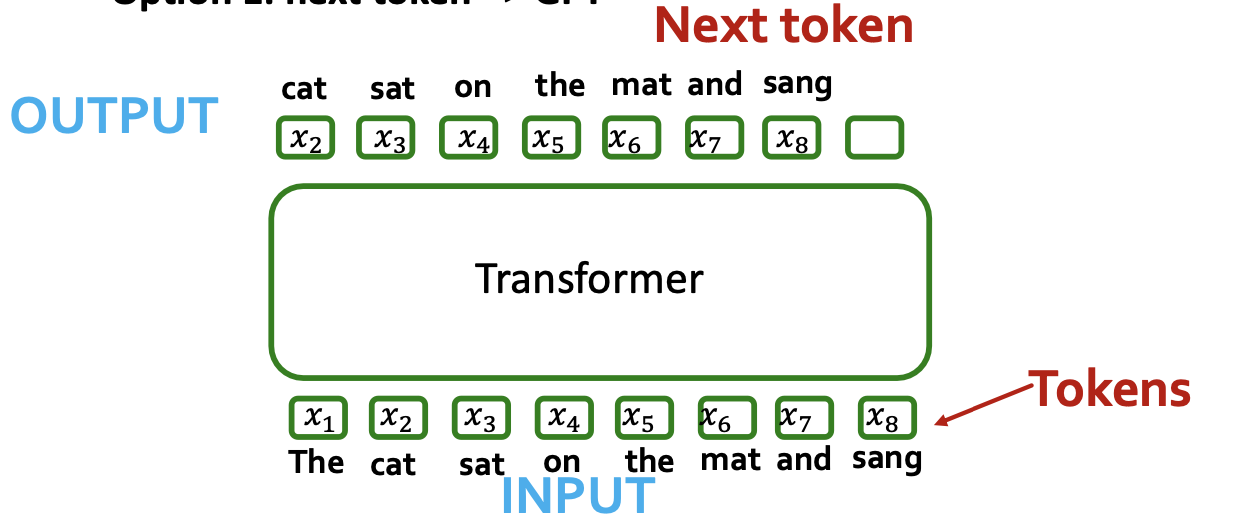
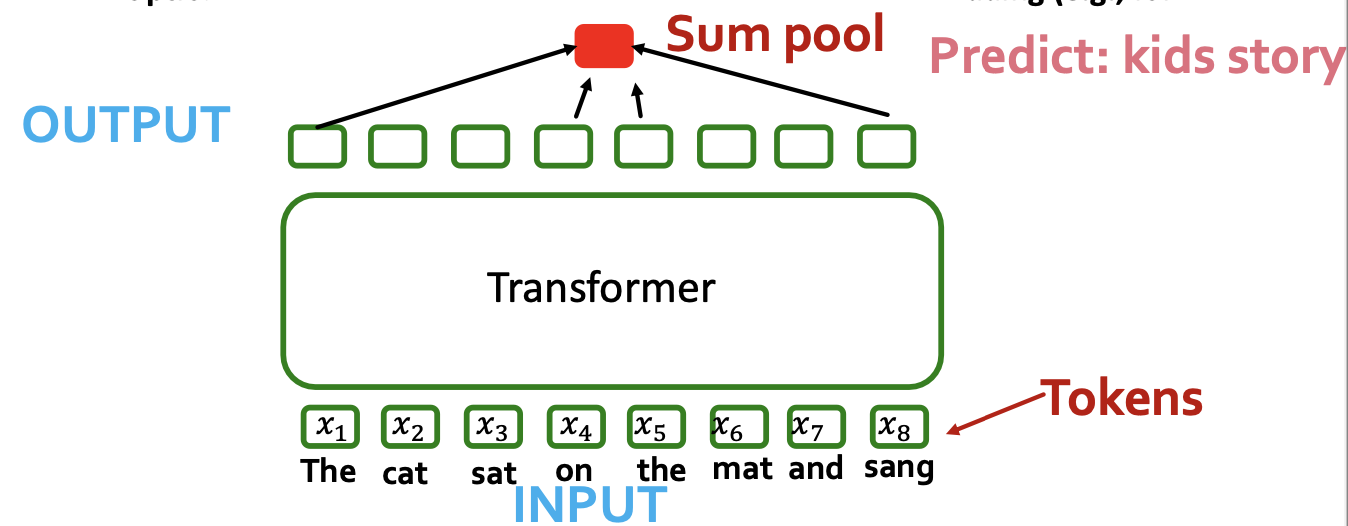
- What output sequence?
- Option 1: next token ⇒ GPT
- Option 2: pool (e.g., sum-pool) to get sequence level-embedding (e.g., for classification task)
Transformer Blueprint
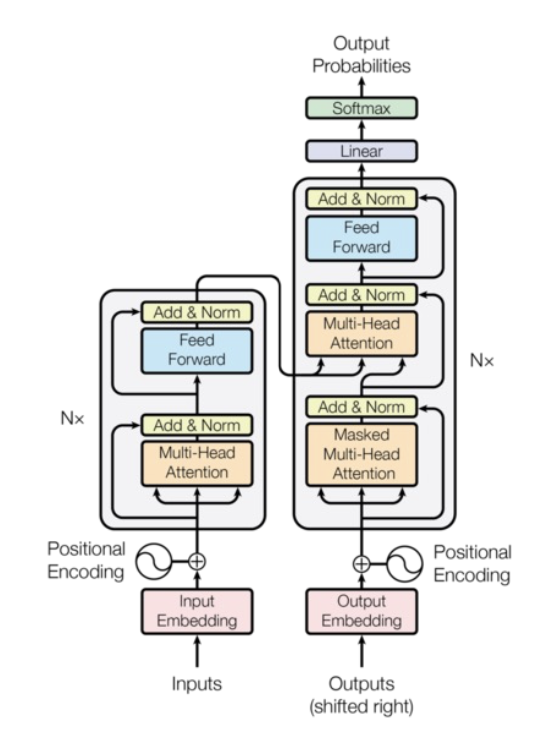
- How are tokens processed?
- Lots of components
- Normalization
- Feed forward networks
- Positional encoding (more later)
- Multi-head self-attention
- What does self-attention block do?
Self-attention
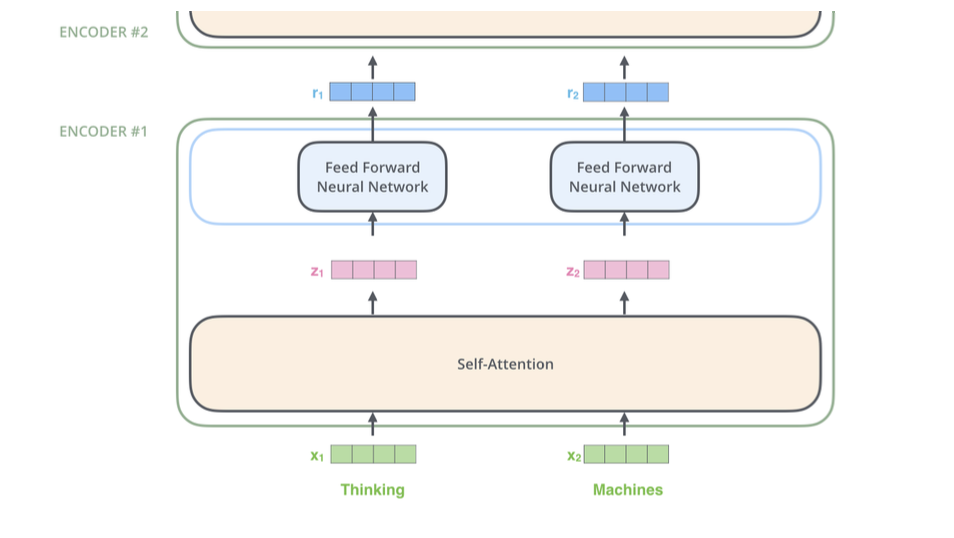
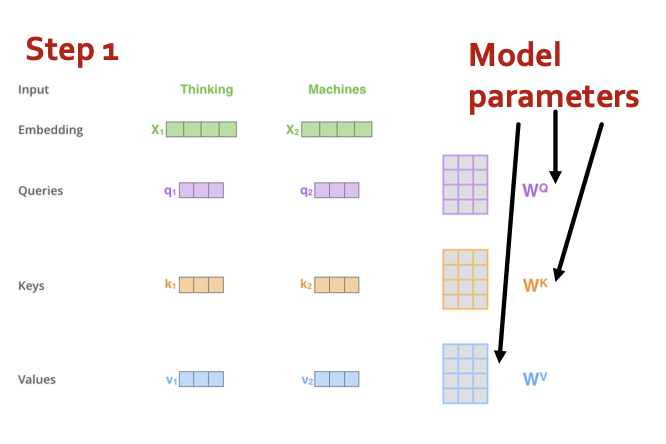
- Step 1: compute “key, value, query” for each input
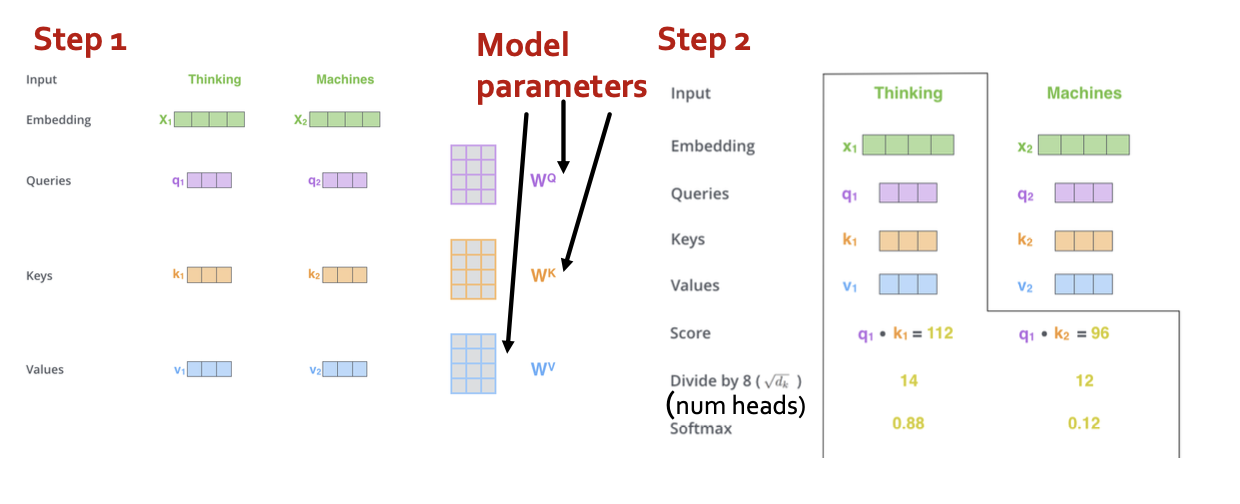
- Step 2: (just for ) compute scores between pairs, turn into probabilities (same for ).
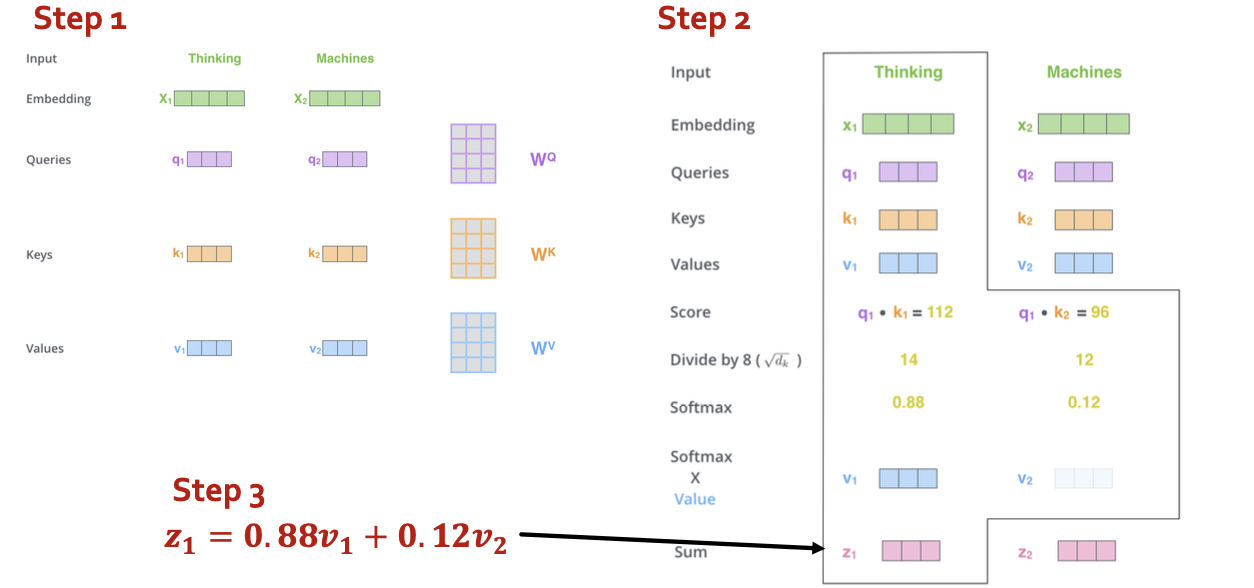
- Step 3: get new embedding by weighted sum of
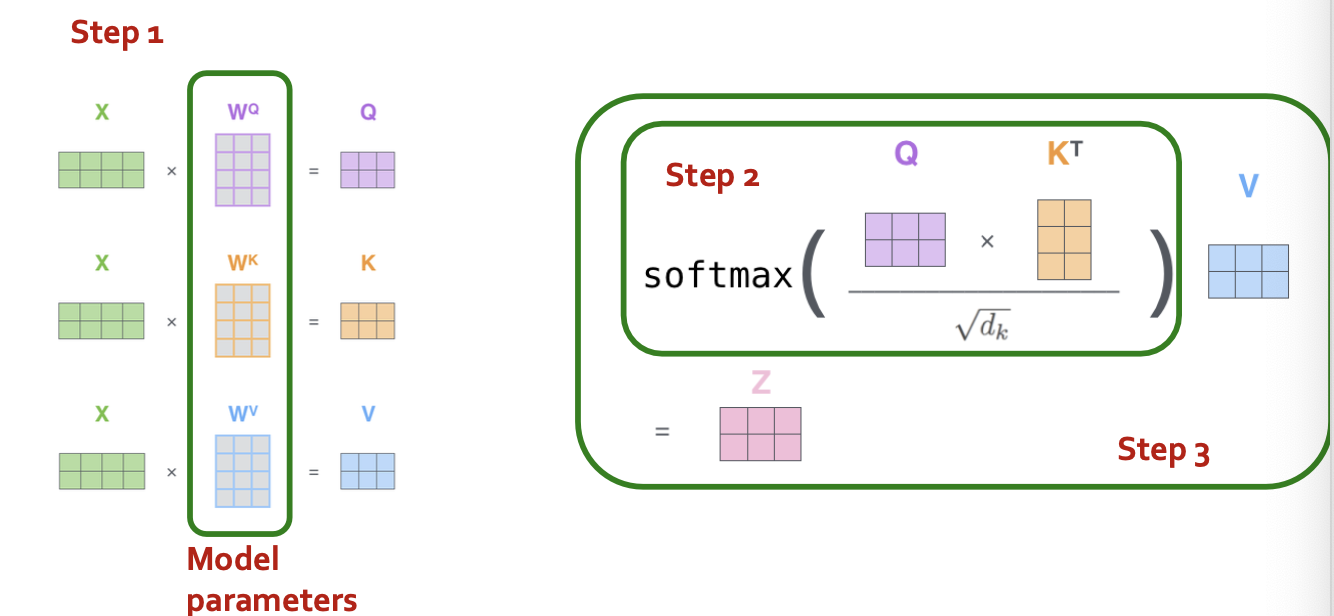
- Same calculation in matrix form
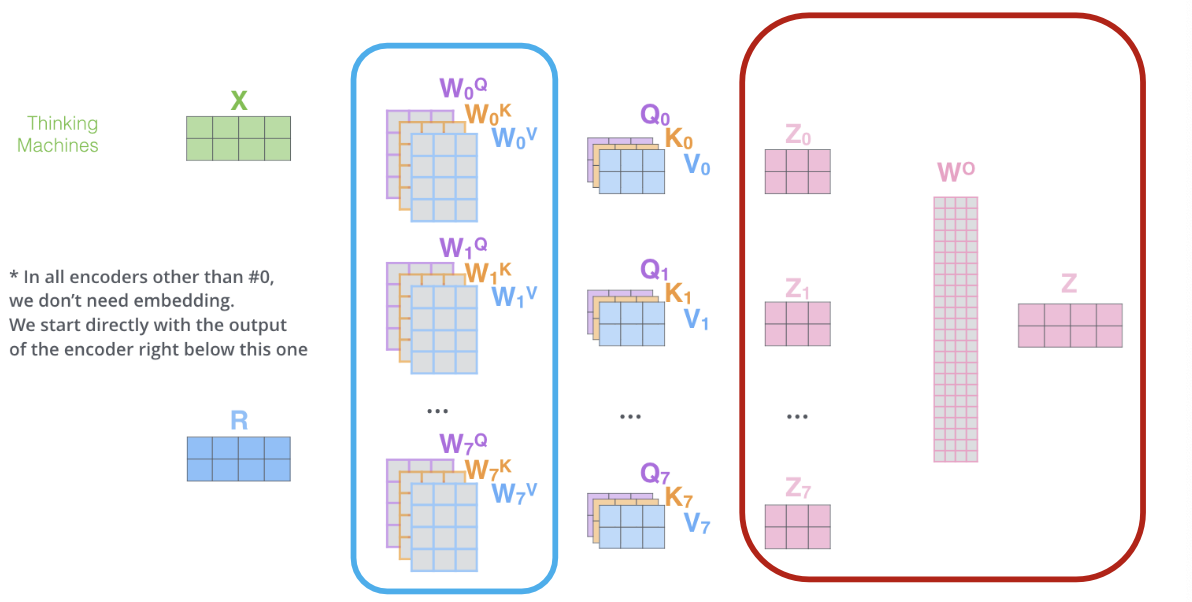
Multi-head self-attention
- Do many self-attentions in parallel, and combine
- Different heads can learn different “similarities” between inputs
- Each has own set of parameters
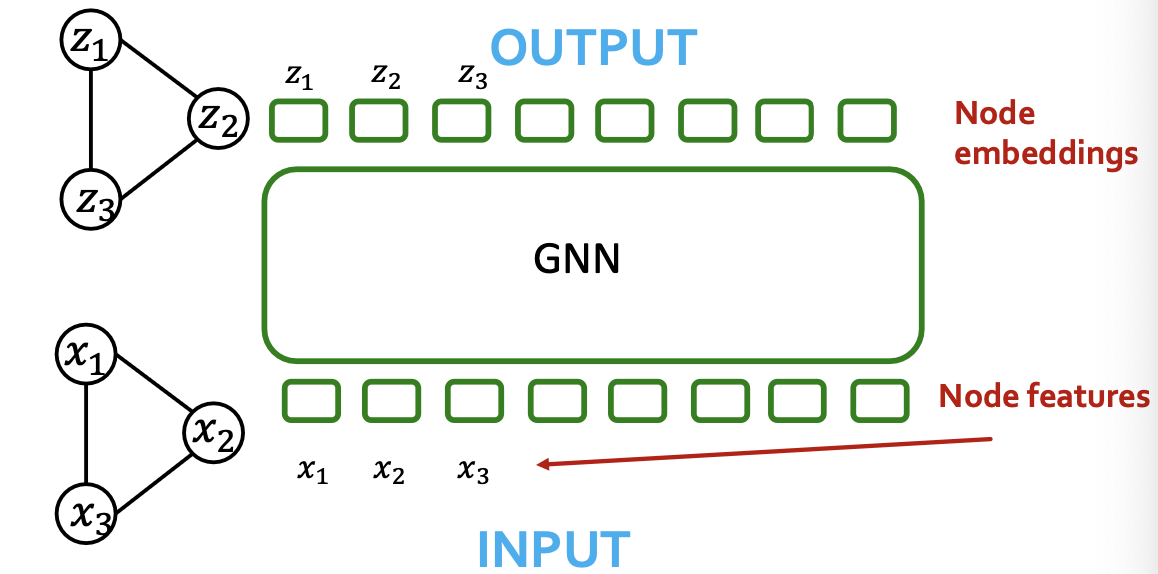
Comparing Transformers and GNN
- Similarity: GNNs also take in a sequence of vectors(in no particular order) and output a sequence of embeddings
- Difference: GNN use message passing, Transformer uses self-attention
Are self-attention and message passing really different?
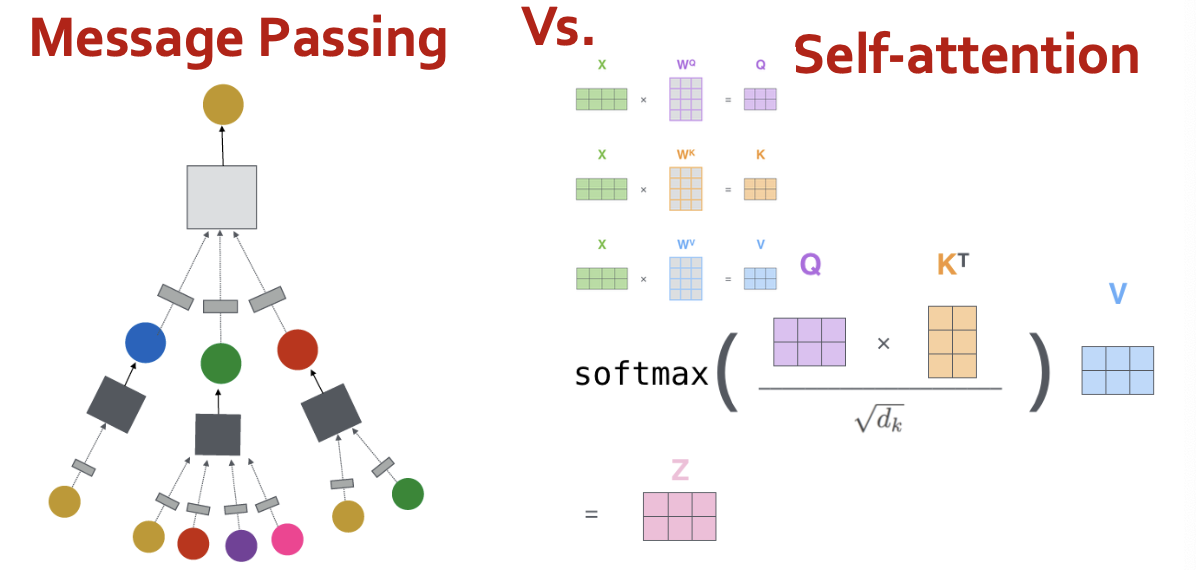
Self-attention vs. message passing
Interpreting the Self-Attention Update
Input stored row-wise
- Recall Formula for attention update:
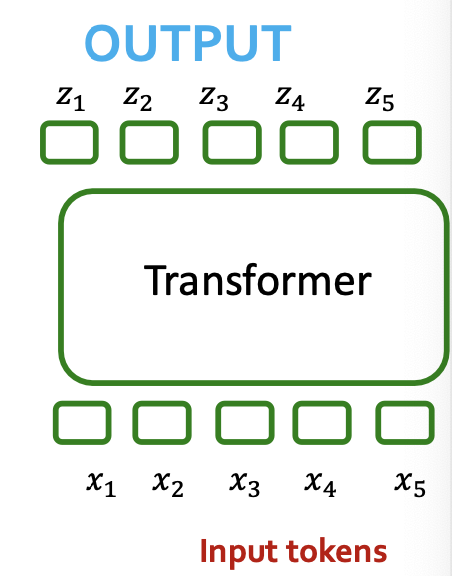
- This formula gives the embedding for all tokens simultaneously
- What if we simplify to just token ?
- If we simplify to just token what does the update look like?
- Steps for computing new embedding for token 1:
- Compute message from :
- Compute query for 1:
- Aggregate all messages:
Self-Attention as Message Passing
- Takeaway: Self-attention can be written as message + aggregation - i.e., it is a GNN!
- But so far there is no graph - just tokens.
- So what graph is this a GNN on?
- Clearly tokens = nodes, but what are the edges?
- Key observation:
- Token 1 depends on (receives “message” from) all other tokens
- → the graph is fully connected!
- Alternatively: if you only sum over you get ~ GAT
- Takeaway 1: Self-attention is a special case of message passing.
- Takeaway 2: It is message passing on the fully connected graph.
- Takeaway 3: Given a graph , if you constrain the self-attention softmax to only be over adjacent to nodes, you get ~ GAT!
A New Design Landscape for Graph Transformers
Processing Graphs with Transformers
- We start with graph(s)
- How to input a graph into a Transformer?
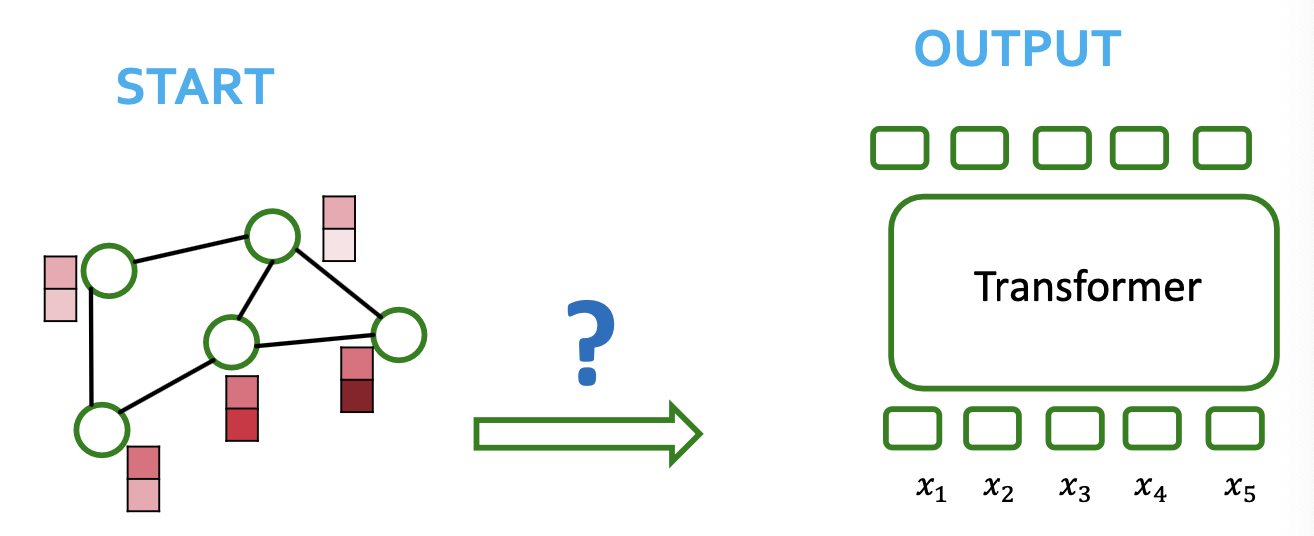
Components of a Transformer
- Understand the key components of the Transformer. Seen already:
- tokenizing
- self-attention
- Decide how to make suitable graph versions of each
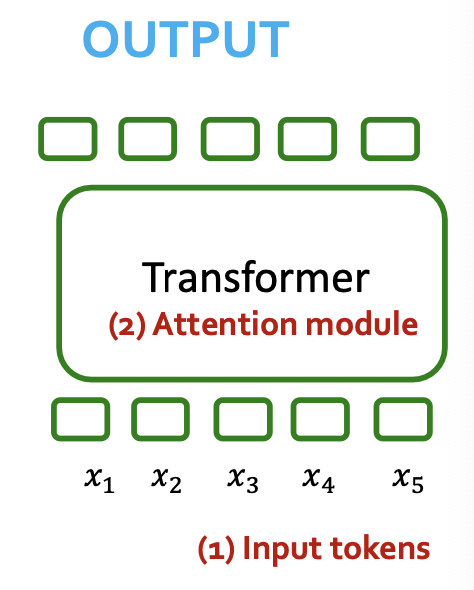
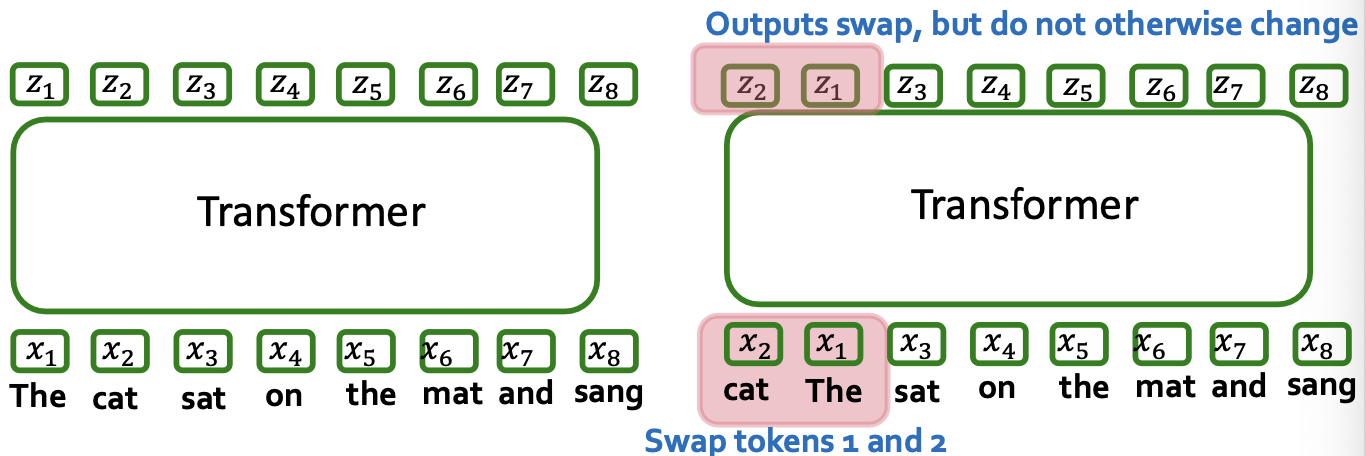
A final key piece: token ordering
- First recall update formula
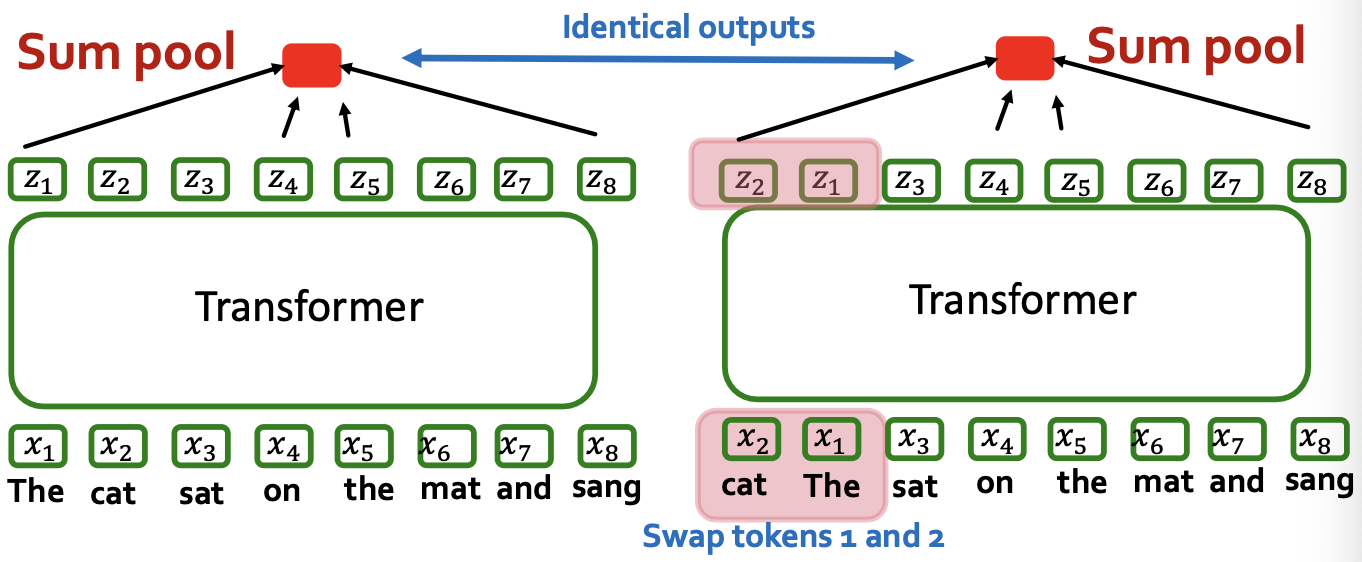
- Key Observation: order of tokens does not matter!!!
- Same predictions no matter what order the words are in! (A “bag of words” prediction model) ….
- How to fix?
Positional Encodings
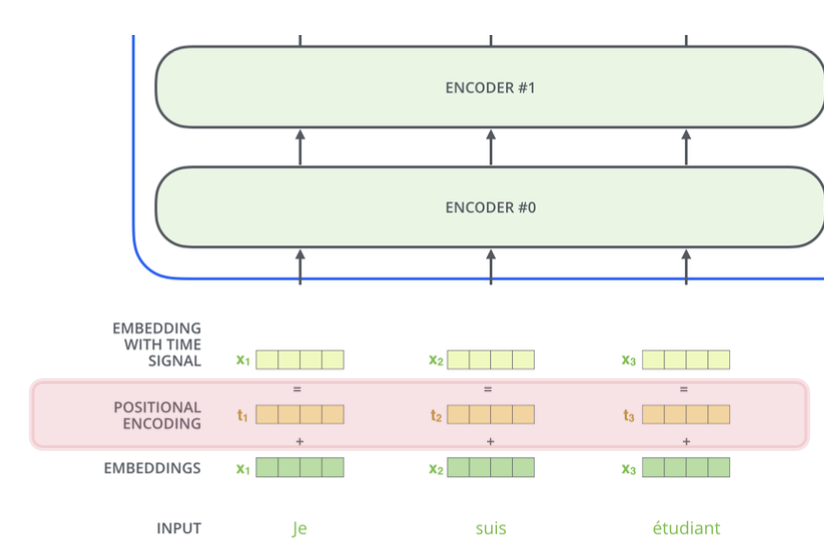
- Transformer doesn’t know order of inputs
- Extra positional features needed so it knows that
- Je = word 1
- suis = word 2
- etc.
- For NLP, positional encoding vectors are learnable parameters
Components of a Transformer
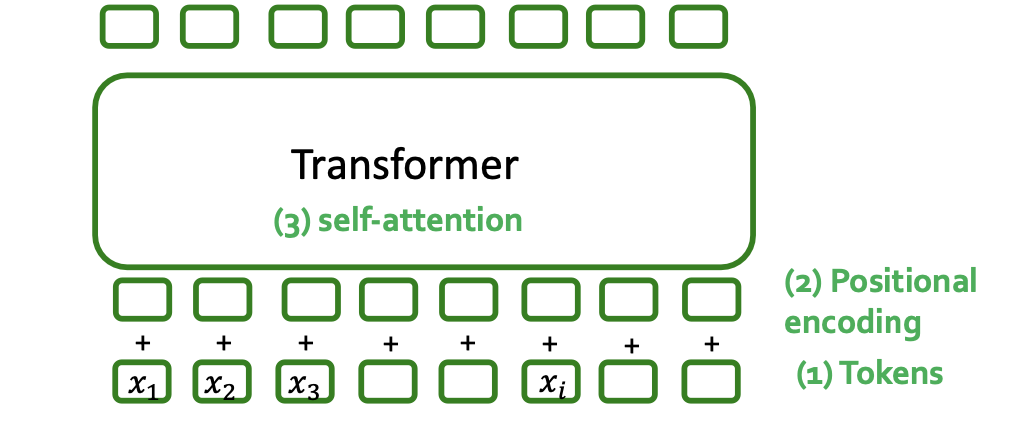
- Key components of Transformer
- Tokenizing
- Positional encoding
- Self-attention
- Key question: What should these be for a graph input?
Processing Graphs with Transformers
- A graph Transformer must take the following inputs:
- (1) Node features? → (1) Tokenizing
- (2) Adjacency information? → (2) Positional encoding
- (3) Edge features? → (3) Self-attention
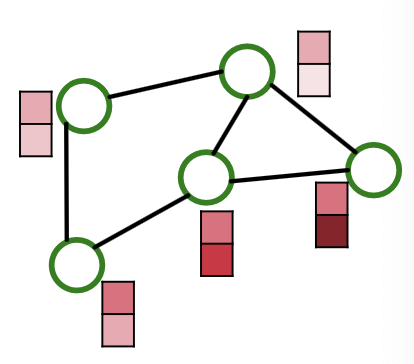
- There are many ways to do this
- Different approaches correspond to different “matchings” between graph inputs (1), (2), (3) transformer components (1), (2), (3)
Node as Tokens
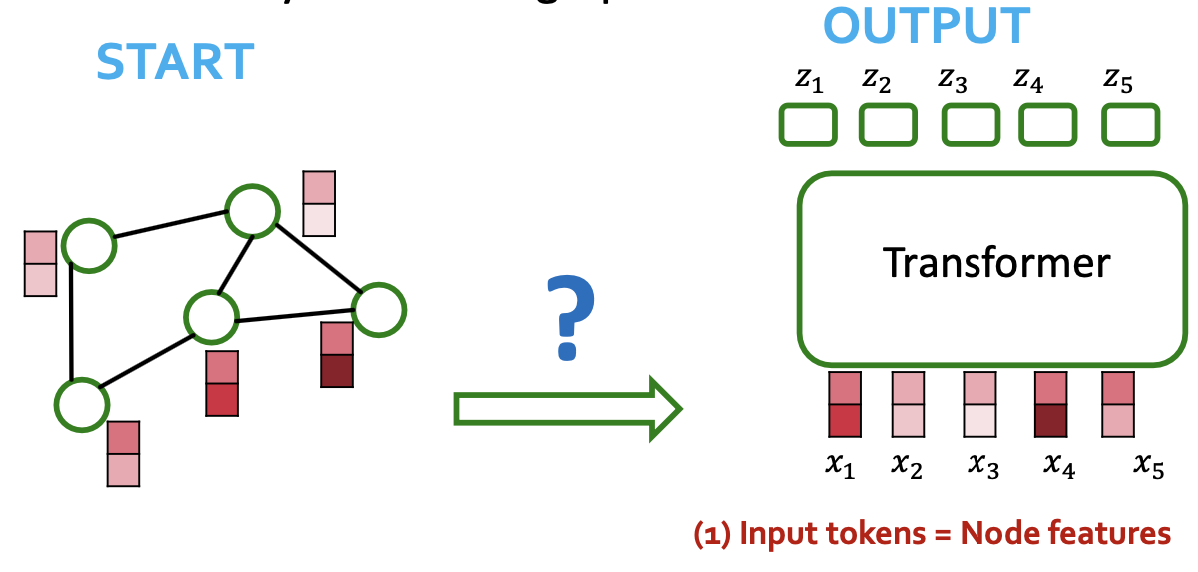
- Q1: What should our tokens be?
- Sensible Idea: node features = input tokens
- This matches the setting for the “attention is message passing on the fully connected graph” observation
- Problem: We completely lose adjacency information!
- How to also inject adjacency information?
How to Add Back Adjacency Information?
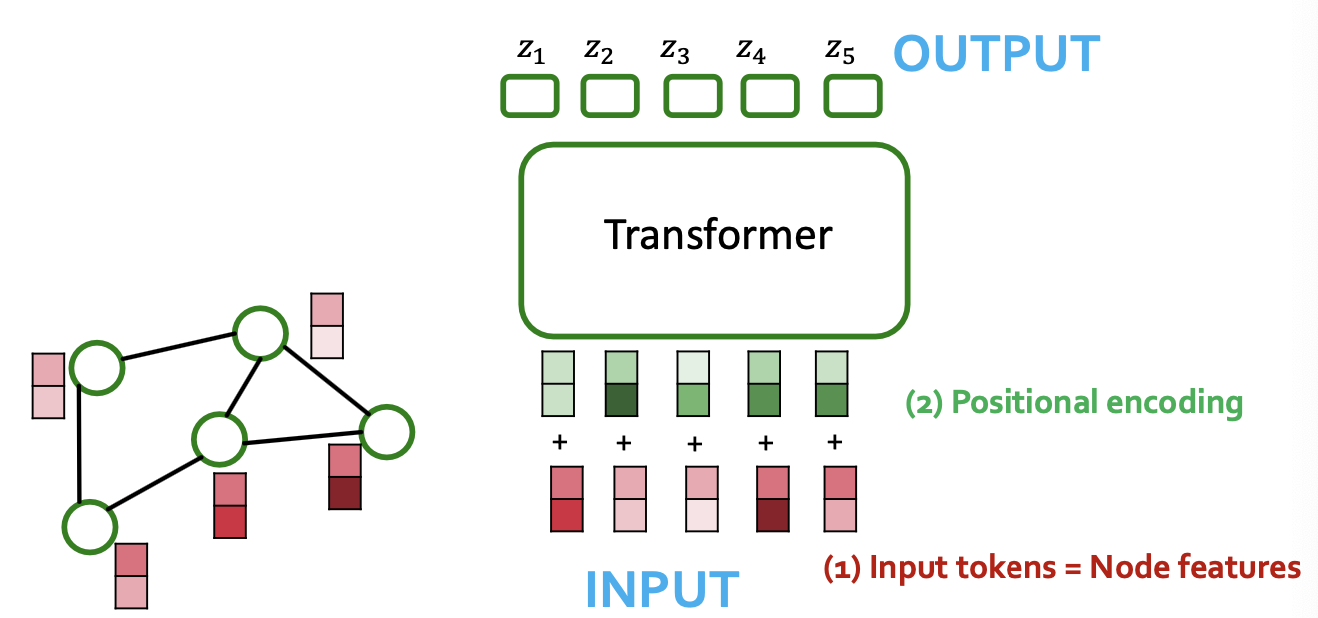
- Idea: Encode adjacency info in the positional encoding for each node.
- Positional encoding describes where a node is in the graph.
Q2: How to design a good positional encoding?
Option 1: Relative Distances
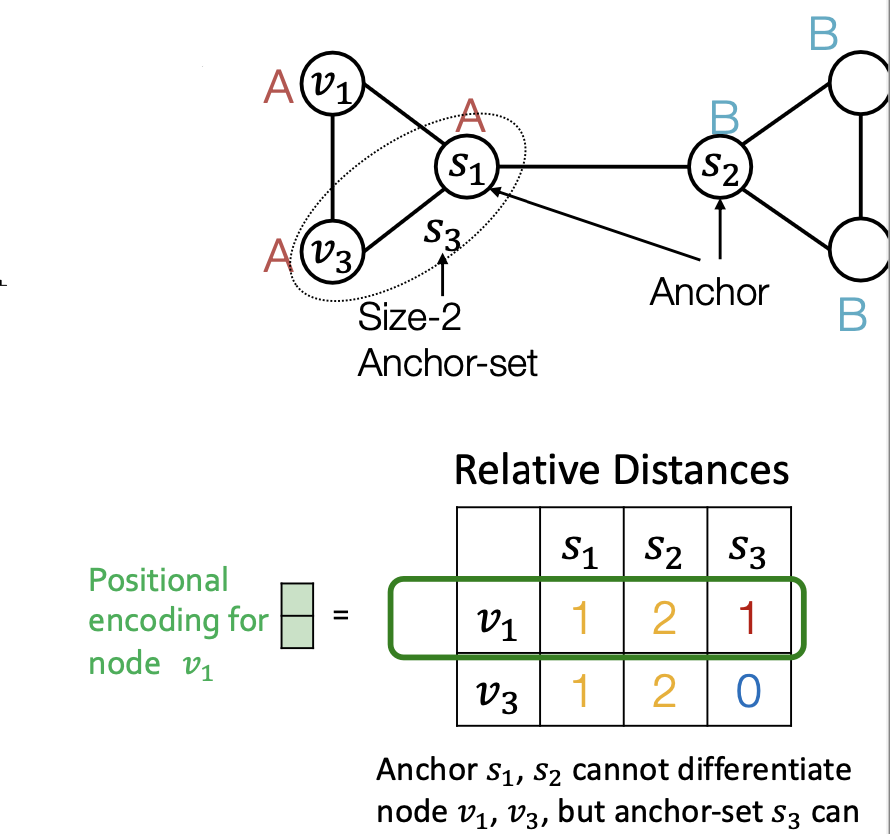
- Last lecture: positional encoding based on relative distances
- Similar methods based on random walk
- This is a good idea! It works well on many cases
- Especially strong for tasks that require counting cycles
Option 2: Laplacian Eigenvector Positional Encodings
- Draw on knowledge of Graph Theory (many useful and powerful tools)
- Key object: Laplacian Matrix
- Each graph has its own Laplacian matrix
- Laplacian encodes the graph structure
- Several Laplacian variants that add degree information differently
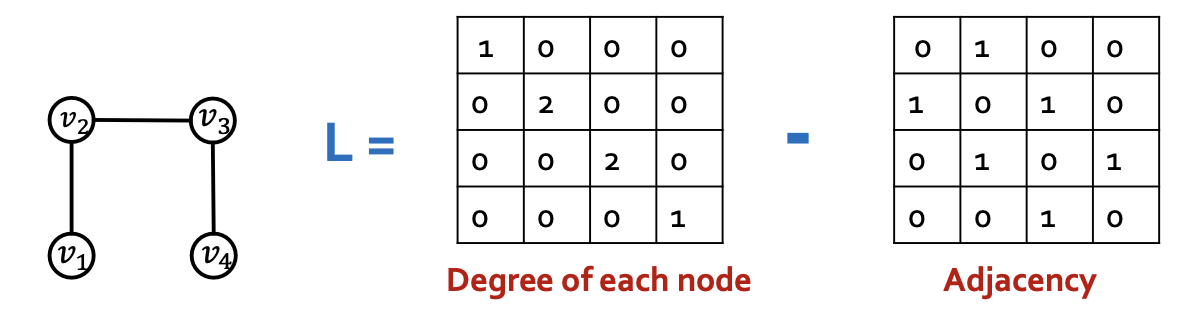
- Laplacian matrix captures graph structure
- Its eigenvectors inherit this structure
- This is important because eigenvectors are vectors and so can be fed into a Transformer
- Eigenvectors with small eigenvalue = local structure, large eigenvalue = global symmetries
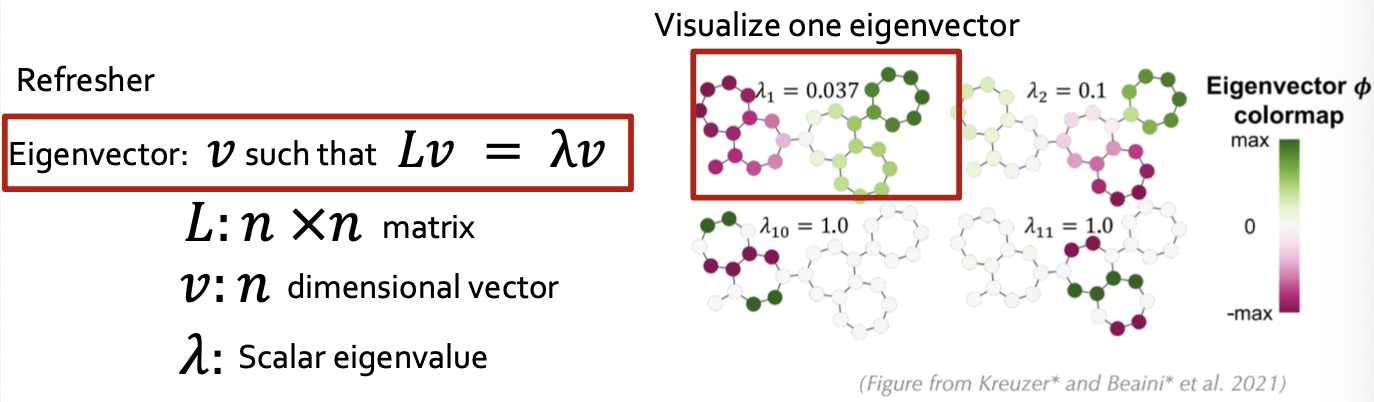
Positional Encoding Steps:
- Compute eigenvectos
- Stack into matrix
- th row is positional encoding for node
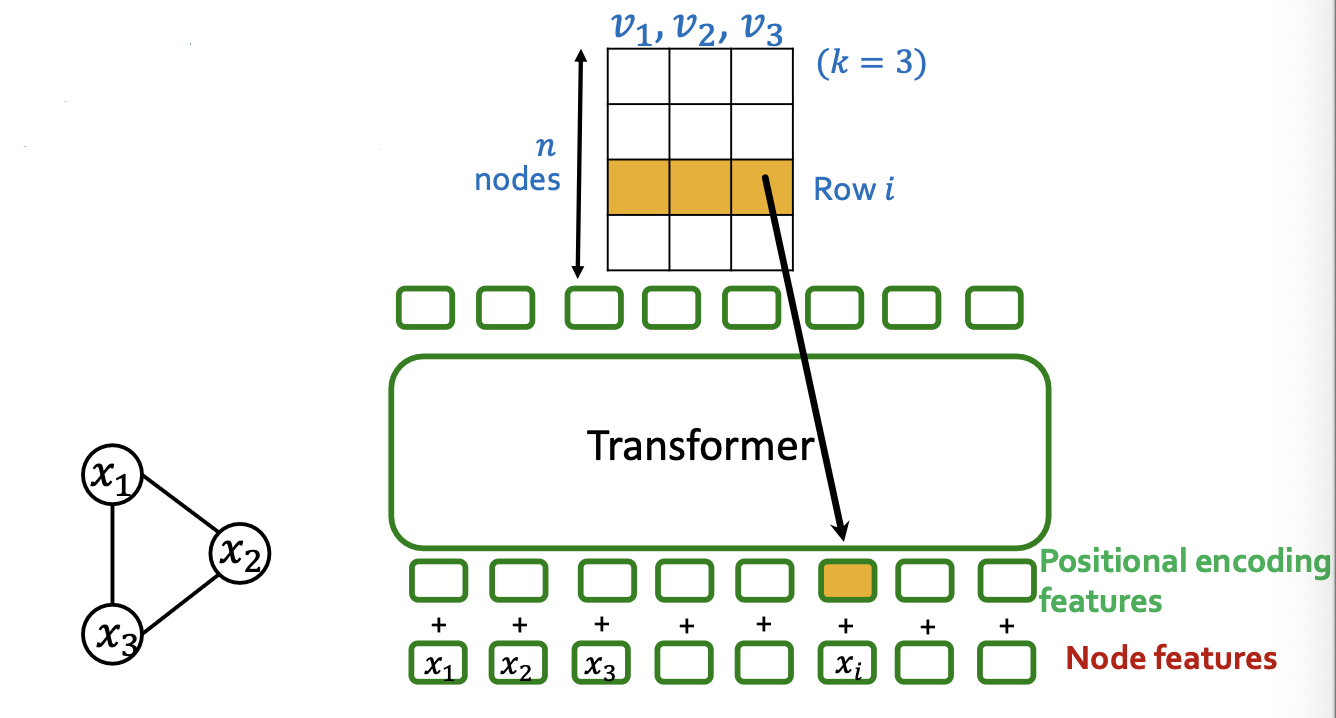
Laplacian Eigenvector positional encodings can also be used with message-passing GNNs
Edge Features in Self-Attention
- Not clear how to add edge features in the tokens or positional encoding
- How about in the attention?
- is an matrix. Entry describes “how much” token contributes to the update of token .
- Idea: adjust based on edge features. Replace with where depends on the edge features
- Implementation:
- If there is an edge between and with features , define (Learned parameters )
- If there is no edge, find shortest edge path between and and define (Learned parameters )
Summary: Graph Transformer Design Space
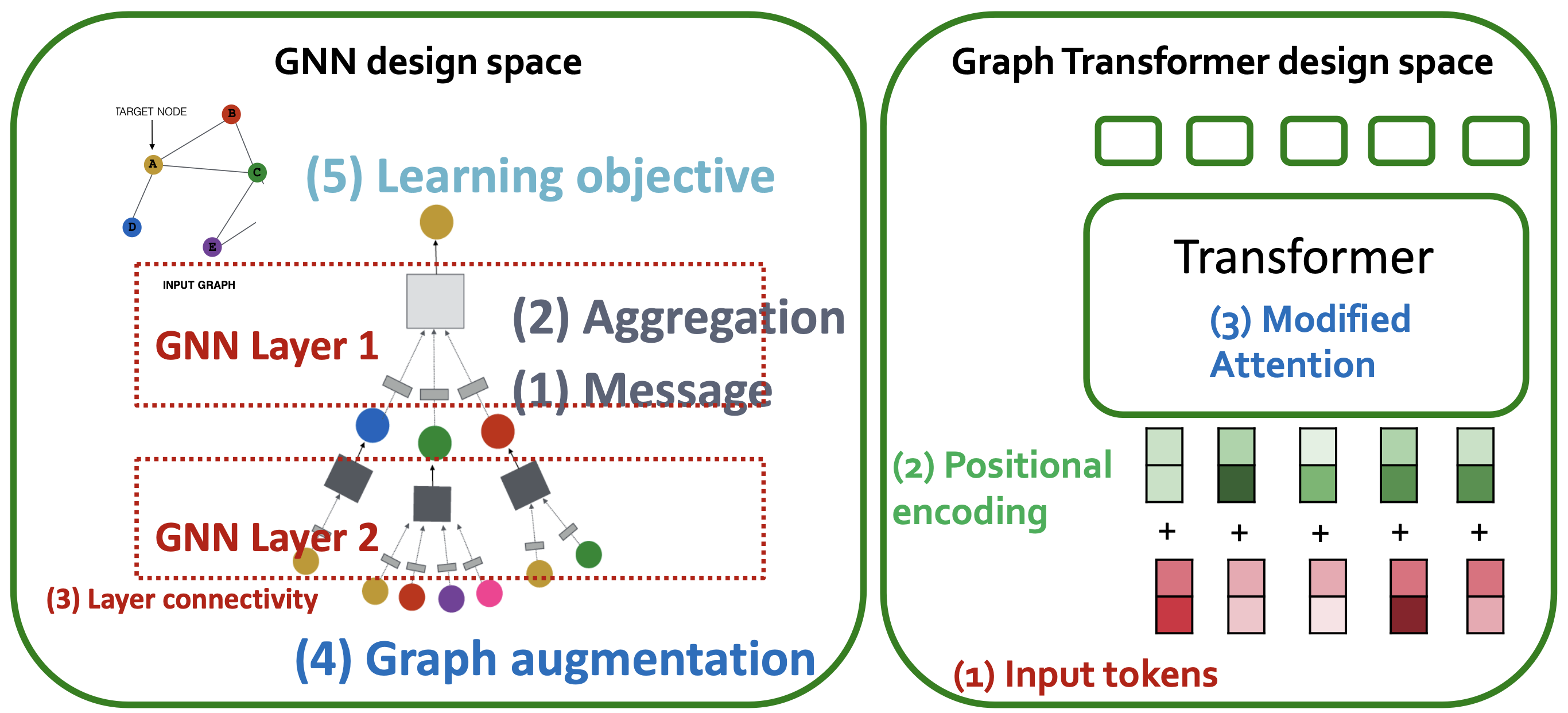
- Tokenization
- Usually node features
- Other options, such as subgraphs, and node + edge features
- Positional Encoding
- Relative Distances, or Laplacian eigenvectors
- Gives Transformer adjacency structure of graph
- Modified Attention
- Re-weight attention using edge features