CS224W-Machine Learning with Graph-GNNs and Algorithmic Reasoning
GNNs and Algorithmic Reasoning
- century saw unprecedented development of algorithms
- Sorting, shortest paths, graph search, routing
- Algorithmic paradigms such as greedy, divide-and-conquer, parallelism, recursion, deterministic vs non-deterministic
Graph Machine Learning
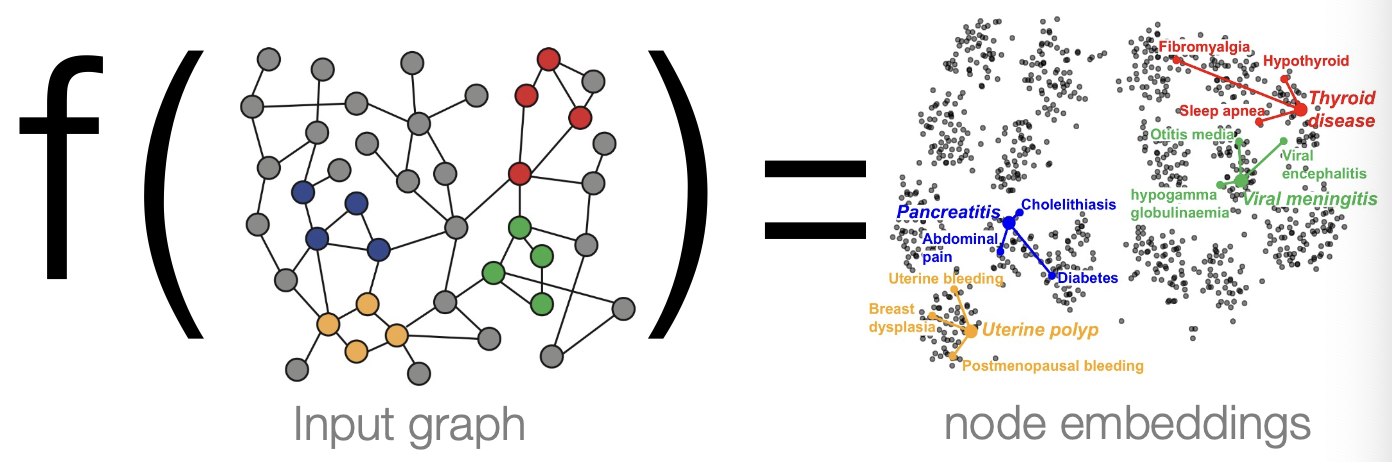
How to learn mapping function ?
Connection to classical graph algorithms unclear.
- So far treated GNNs as a “new” type of graph algorithm.
- But in reality, graph ML has deep connections to the theory of computer science
Graph Neural Networks
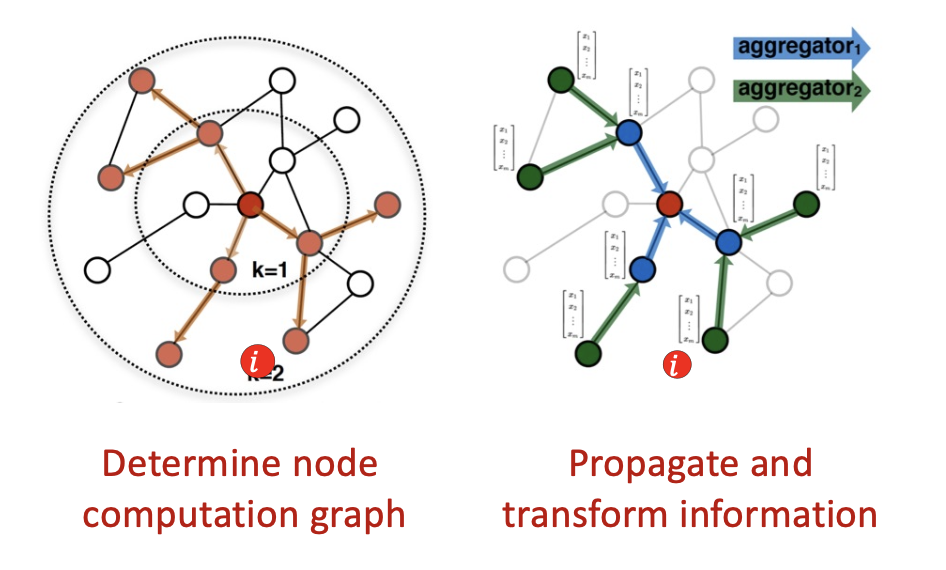
- GNNs defined by computation process
- I.e., how information is propagated across the graph to compute node embeddings
GNNs as graph algorithms
- We define “message passing” a computational process
- Message passing defines a class of algorithms on graphs
- But it’s not clear what algorithm(s)
- A clue to get started: We have already seen one algorithm GNNs can express…
GNNs and the Weisfeiler-Lehman Isomorphism Test
- Simple test for testing if two graphs are the same:
- Assign each node a “color”
- Randomly hash neighbor colors until stable coloring obtained
- Read out the final color histogram
- Declare two graphs:
- Non-isomorphic if final color histograms differ
- Test inconclusive otherwise ( i.e., we do not know for sure that two graphs are isomorphic if the counts are the same)
- Running the test…
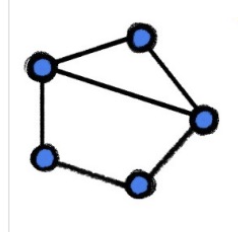
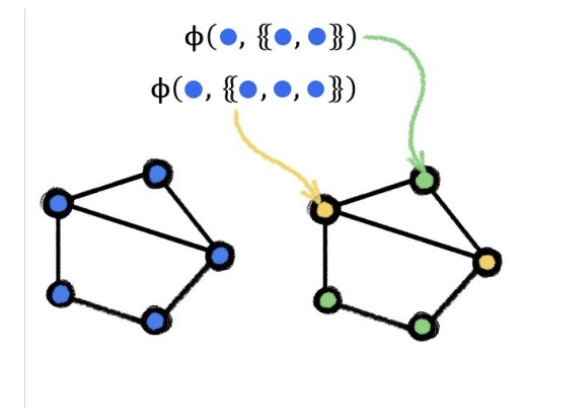
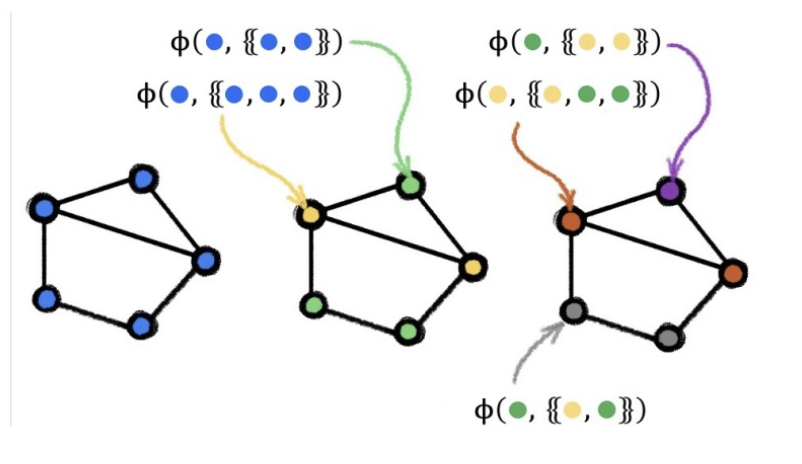
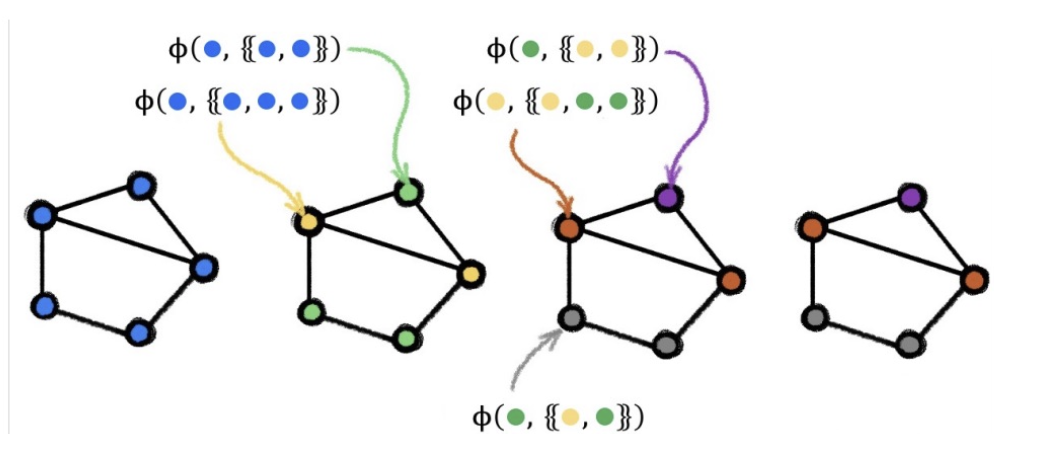
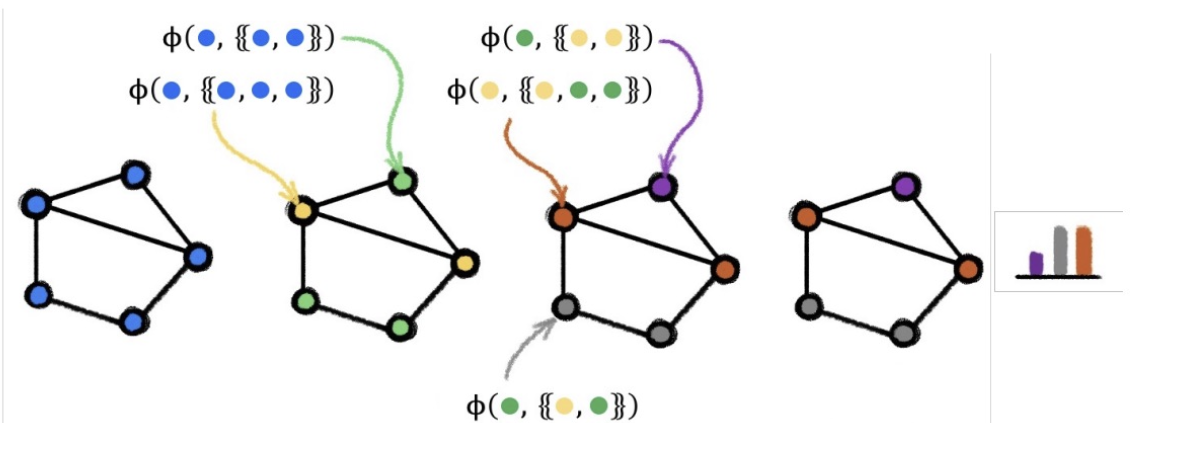
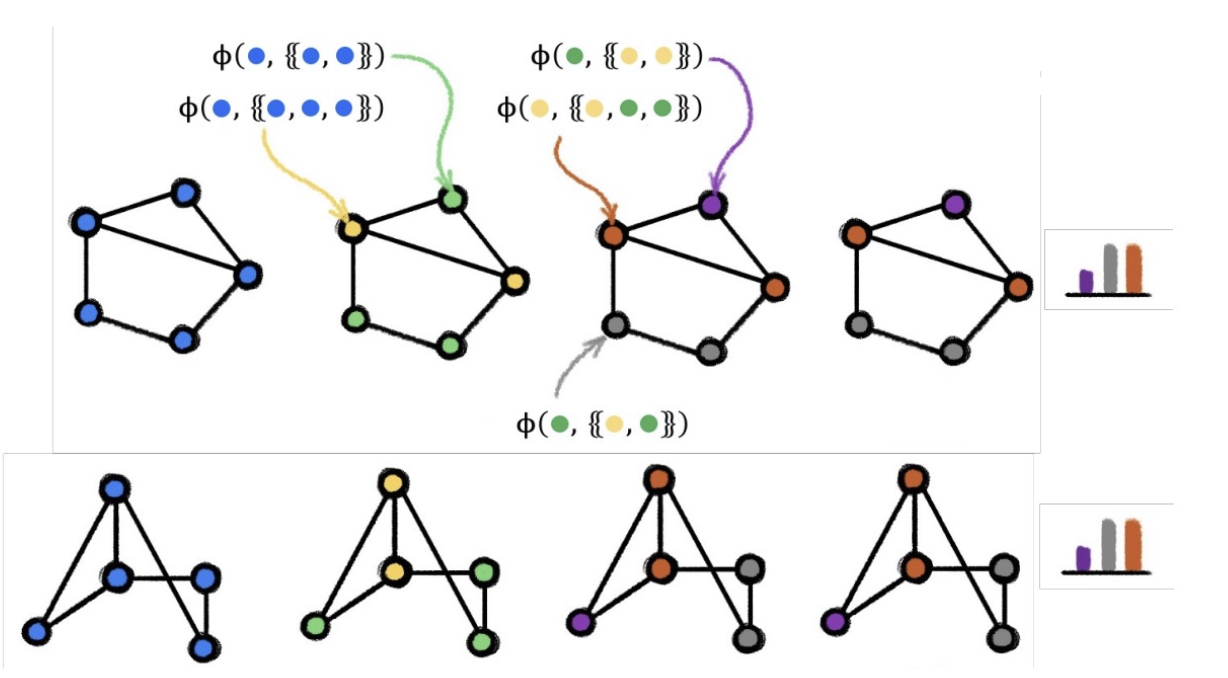
- We have seen GIN is as expressive as the 1-WL test
- i.e., Given , the following are equivalent:
- there exist parameters s.t.
- 1-WL distinguishes ’
- i.e., Given , the following are equivalent:
- GIN is a “neural version” of the 1-WL algorithm
- Replaces HASH function with learnable MLP
- But this does not mean that 1-WL is the only graph algorithm GNNs can simulate.
- An untrained GNN (random MLP = random hash) is close to the 1-WL test.
Algorithmic structure of neural networks
- A neural network architecture defines a learnable computer program
- Key intuition:
- MLPs easily learn smooth functions (e.g., linear, log, exp)
- MLPs bad at learning complex function (e.g., sums of smooth functions - i.e., for-loops)
- Approach: define progressively more complex algorithmic problems, and corresponding neural net architectures capable of solving each.
Neural Nets and Algorithm Structure
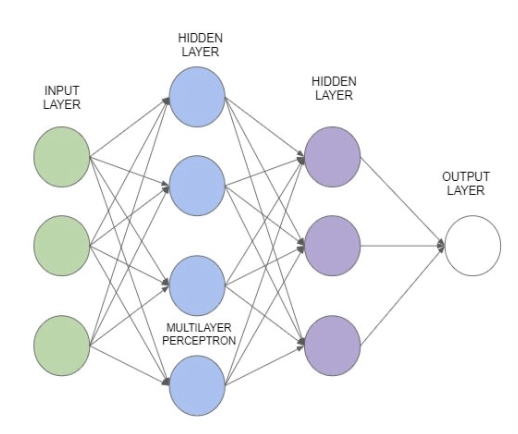
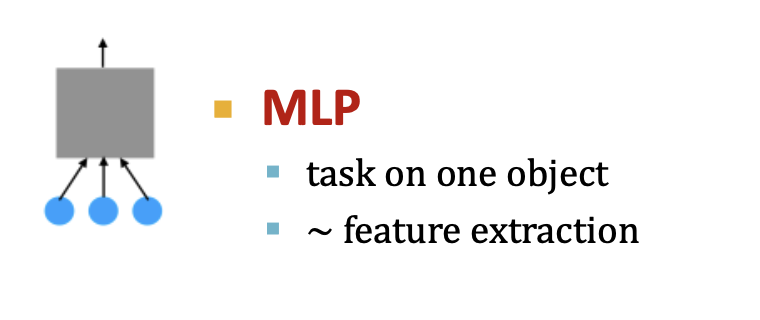
- Problem 1 (feature extraction):
- Input: “flat” features (e.g., color, size, position)
- Output: scalar value (e.g., is it round and yellow?)
- No other prior knowledge (minimal assumptions)
- Q: What neural network choice suits this problem?
- A: MLPs (multilayer perceptrons)
- Universal approximator
- Makes no assumptions on input/output structure.
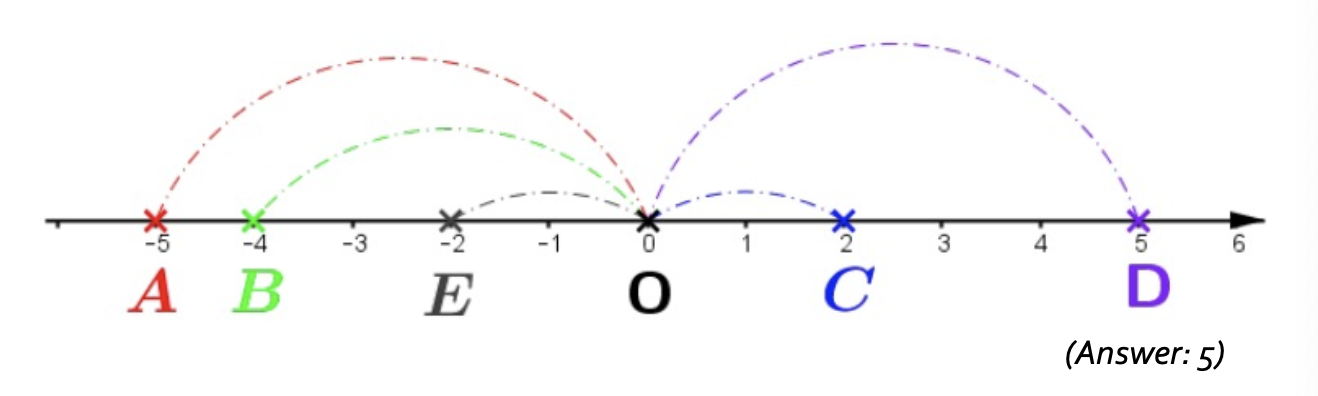
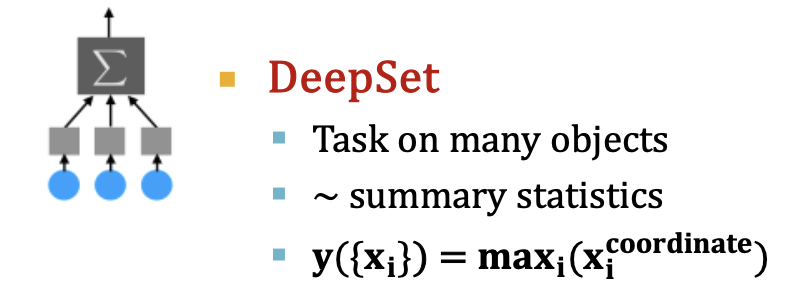
- Problem 2 (summary statistics):
- Input: a set of objects , each with features containing their coordinate and color
- Task Output: some aggregate property of the set (e.g., largest x-coordinate)
-
- MLP model:
- Not well suited to this task
- To learn max (and min) MLP has to learn to execute a for-loop
- This is a complex operation, MLP needs lots of data to learn
- New Deepset model:
-
- Well suited to this task
- Can approxmator softmax, a simple approx. to min/max
-
- Key points:
- Consequence: MLPs only must learn simple functions (log/exp)
- This can be done easily, without needing much data
- MLP can provably also learn this. But must learn complex for-loop, which requires lots of training data
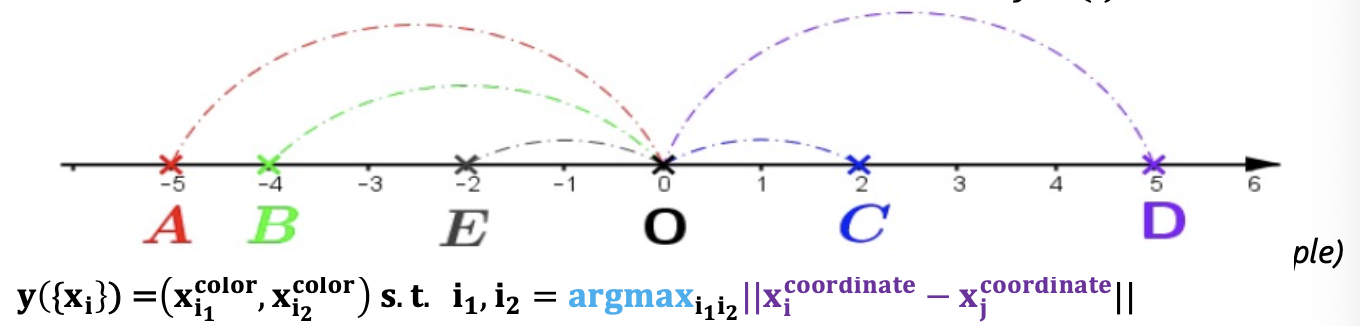
- Problem 3 (relational argmax)
- Input: a set of objects , each with features containing their coordinate and color
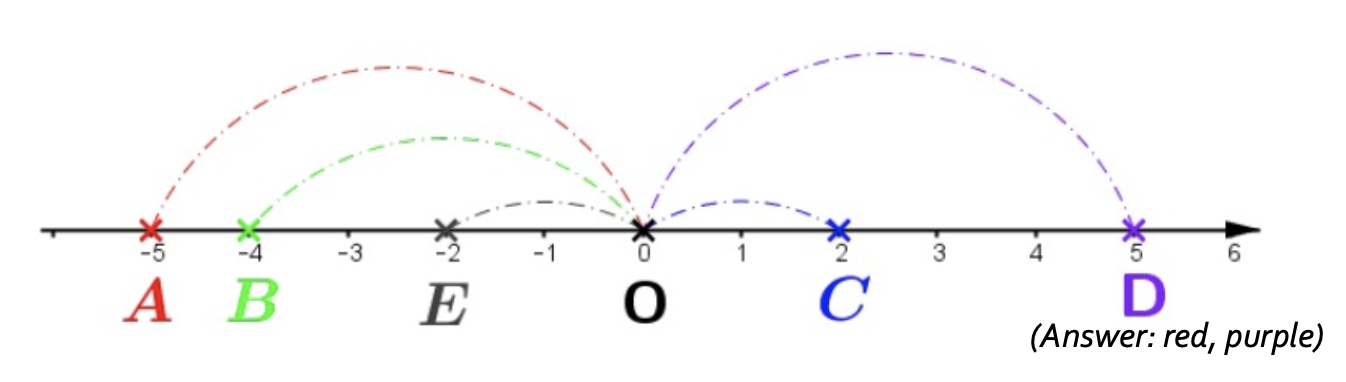
- Task Output: property of pairwise relation (e.g., what are the colors of the two furthest away objects?)
- s.t.,
- DeepSet poorly suited to modelling pairwise relations
- Recall:
- Reason:
- task requires comparing pairs of objects - i.e., a for-loop
- each object processed independently by
- Consequence: has to learn complex for-loop (hard)
- provably cannot learn pairwise relations Theorem: Suppose if and only if . Then there is no such that
- GNN well suited to this task: for-loop is built in!
- E.g., recall GIN update
- For
-
- Update of node embedding depends on other nodes
- computes distance from to
- identifies which pair is best in
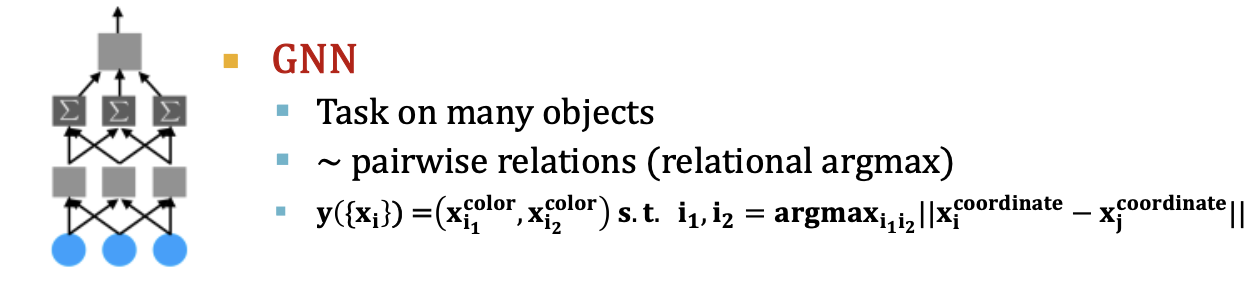
General algorithm class for GNN?
- GNNs are good at solving tasks that require relating pairs of objects (nodes)
- MLPs/DeepSets cannot do this easily since they have to learn for-loop
- “Relational argmax” is just one problem that GNN can solve….
Algorithmic Class of GNNs
Dynamic Programming
- Task 4 (shortest path):
- Input: a weighted graph and a chosen source node
- Output: all shortest paths out of source node (shortest path tree)
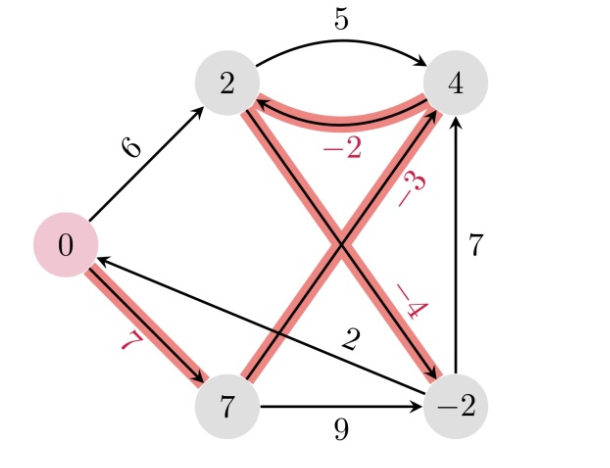
GNN are Dynamic Programs
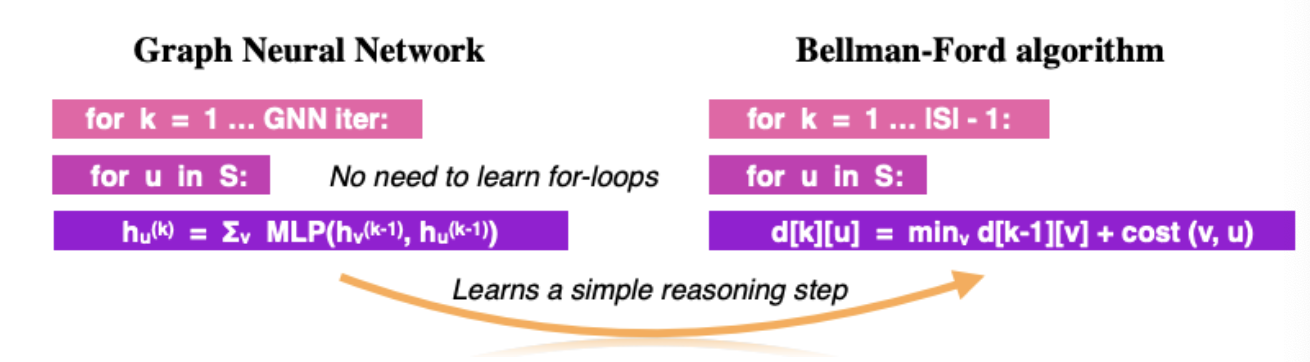
- Dynamic programming has very similar form to GNN
- Both have nested for-loops over:
- Number of GNN layers / iterations of BF
- Each node in graph
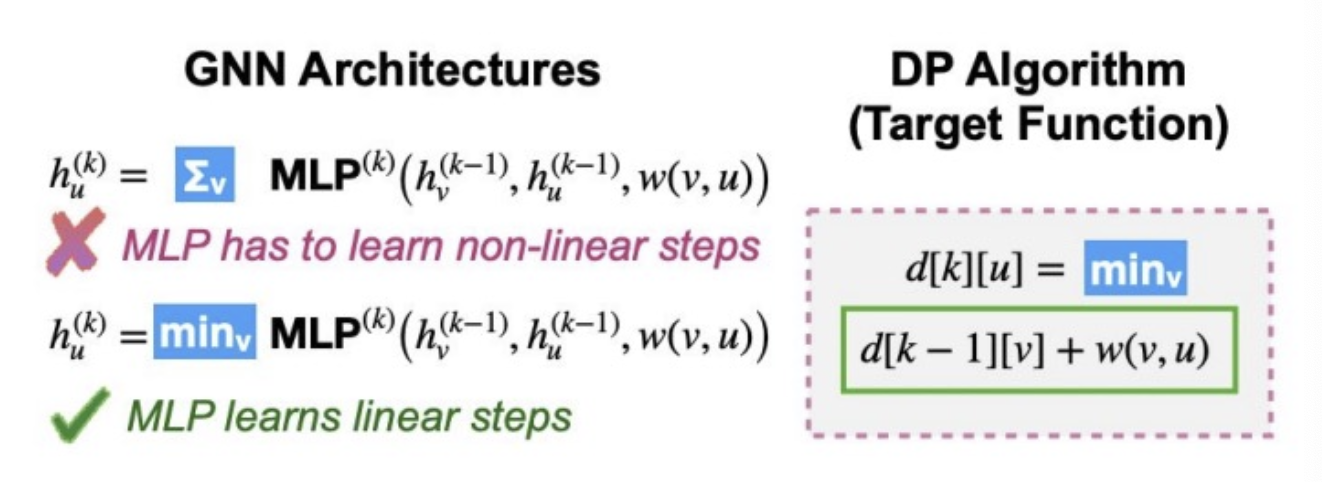
- GNN aggregation + MLP only needs to learn sum + min
- An MLP trying to learn a DP has to learn double-nested for loop (really hard to do)
- There is an even better choice of GNN..
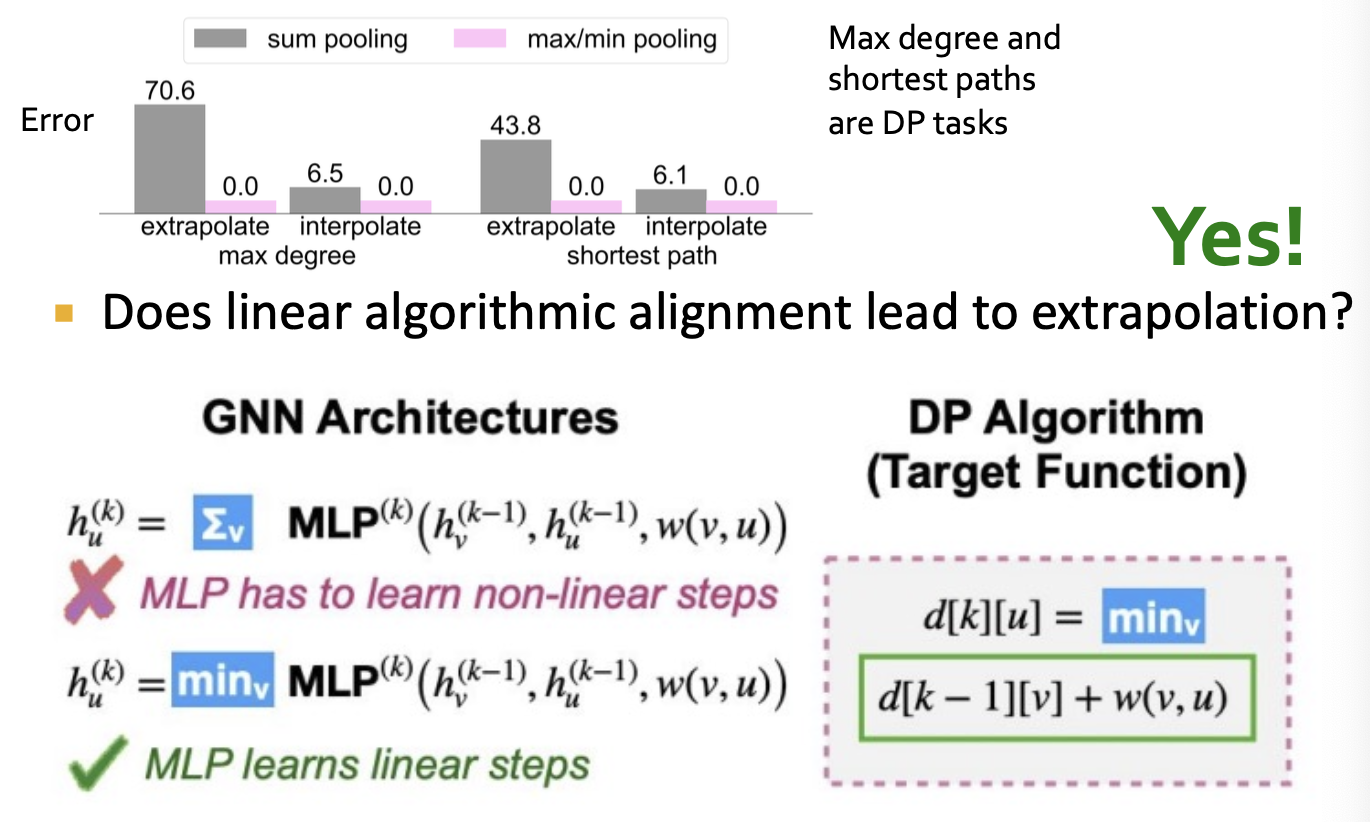
- Choose min activation to match DP
- Then MLP only needs to learn linear function!
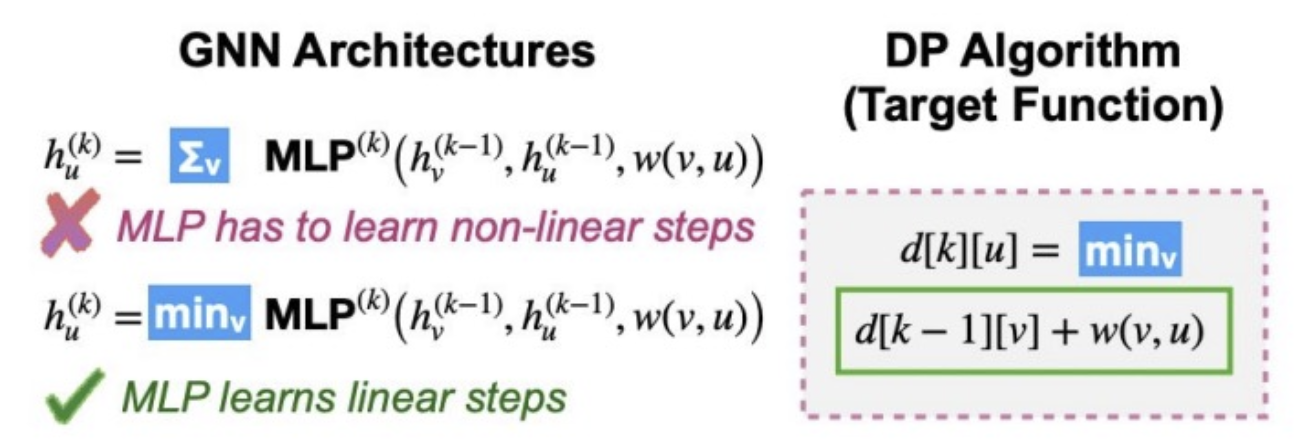
Algorithmic Alignment
Algorithmic-Centric Principle For Neural Network Design
- In the previous section we studied what type of tasks GNN excel at solving
- Key idea: Focus on the algorithm that solves the tasks
- If the neural net can express the algorithm easily, then it’s a good choice of architecture.
Algorithmic Alignment
Given a target algorithm , a neural network architecture if:
- a simple function
- can express
- Each has few learnable parameters. (so can learn easily)
Designing New Neural Nets with Algorithmic Alignment
- GNN is algorithmically aligned to dynamic programming (DP)
- But algorithmic alignment is a general principle for designing neural network architectures
- So we should be able to use it to design entirely new neural networks given a particular problem
- Many successful example of this in this
Applications of Algorithmic Alignment
- Application 1: building a network to solve a new task
- The subset-sum problem (NP-hard)
- Application 2: building neural networks that can generalize out-of-distribution
- The linear algorithmic alignment hypothesis
Solving an NP-hard Task: Subset Sum
- Task: given a set of number , decide if there exists a subset that sums to .
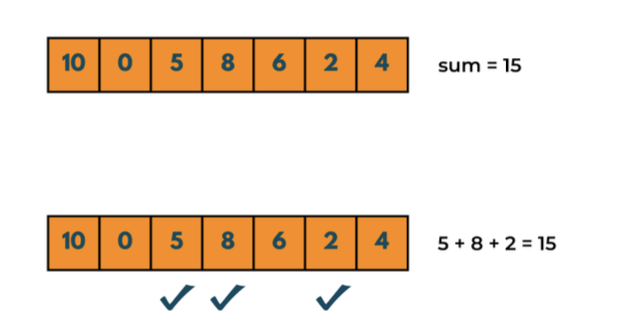
- Known to be NP-hard, no DP algorithm can solve this (so GNN not suitable)
- Exhaustive Search Algorithm for solving subset sum:
- Loop over all subset and check is sum is
- Clearly not polynomial time… but can it inspire a neural net architecture?
- Neural Exhaustive Search:
- Given ,
-
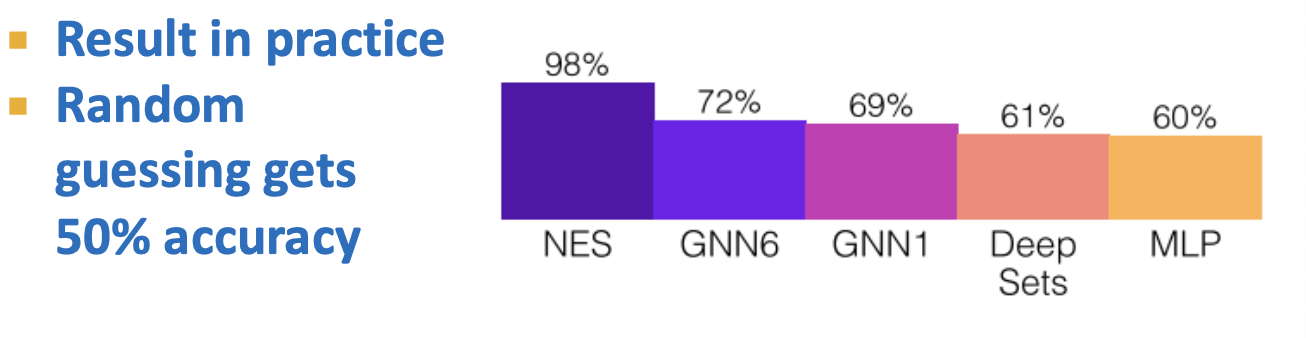
- Algorithmically aligned to exhaustive search:
- LSTM learns if the sum (simple function)
- Max aggregation identifies best subset
- MLP maps to true/false value
- Algorithmically aligned to exhaustive search:
Algorithmic Alignment and Extrapolation
- We have argued that algorithmic alignment can help inspire architectures well suited to particular tasks
- By well suited, we mean generalizes well using little training data
- But true AI requires something stronger than this…
- Also needs to “extrapolate” to instances that look very different from the training data
- Extrapolation is also called out-of-distribution generalization
- Extrapolation is a holy grail of AI, necessary for systems to behave reliably in unforeseen future situations
How MLPs extrapolate
- Observation: ReLU MLPs extrapolate linearly
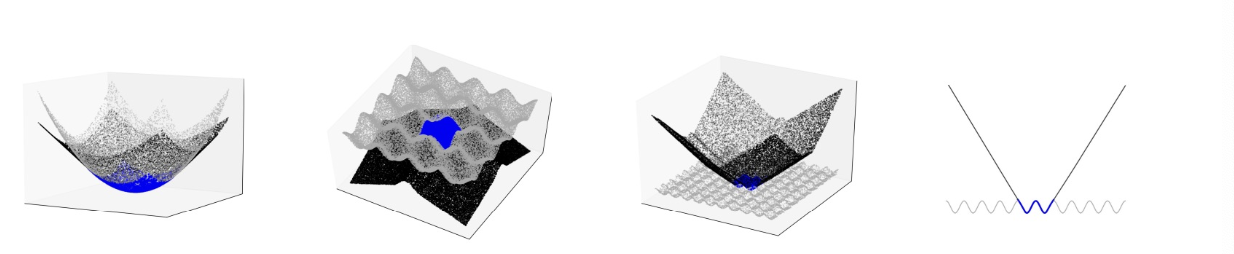
- Can be proved that extrapolation is perfect for linear target functions
- But ReLU MLPs cannot generalize for non-linear target functions…
- The need for linearity for MLP extrapolation suggests a hypothesis for GNN extrapolation…
The Linear Algorithmic Alignment Hypothesis
- Linear Algorithmic Alignment Hypothesis
Linear algorithmic alignment implies a neural network can extrapolate to unseen data
- Linear Algorithmic Alignment
Given a target algorithm , a neural network architecture linearly aligns if:
- can express
- contains a combination of non-linearities and MLPs
- Each MLP in only has to learn a linear map to perfectly fit
How GNNs extrapolate
- Recall GNN for learning dynamic programs
- GNN aggregation function is key
- Min aggregation is linearly algorithmically aligned
- Sum aggregation is not
- Does linear algorithmic alignment lead to extrapolation?